I love the Otherworld and contemplating its nature and how to be in
relation to it. I love thinking and writing too, but it's the connection
with the Otherworld which is my source. When I do my spirit embodiment,
and get taken on a journey, it goes so deep. And this happened with a
dragon the other day, and it has effects on this world beyond just
myself. This began to happen in 1999, and the healing work I did on that
basis was strong, people still tell me about it years later.
And then it slowly went, I gradually lost the power of my connection to
the Otherworld due to the relationship I was in, and of course I was
party to that, but I think it was hard for her if I shone too brightly.
And now it is returning, I have the cave in which I live and I am
re-establishing my connections to the Otherworld. But I think more
confidently this time, I have been scoured and impediments in myself
have healed.
Friday, 30 November 2018

Saturday, 24 November 2018
ON NOT TAKING THINGS PERSONALLY
There are different ways of
looking at the reasons for things. In my Buddhist days, I learnt that
there are 5 different levels of causality. Buddhism has lots of lists.
These days, I am happy with 2 sorts of reasons: the ordinary, this-world
kind of reasoning; and the Spirit reasons for events, the bigger
picture.
So if your car won't start, the natural response may be to feel frustrated, and anxious about that appointment you have to get to. The Spirit perspective would be to wonder what it is about today and the way I am that my car won't start? That way it becomes de-personalised. You may not have an 'answer', but it is a different kind of contemplation. You never need take anything personally any more once you have that Spirit perspective. You can view everything objectively. So someone is unpleasant to you: no need to get offended, just wonder why that person felt the need to do that, and what the bigger picture might be, what Spirit might be trying to tell you. But again, don't rush to find an 'answer', it's not usually as simple as that.
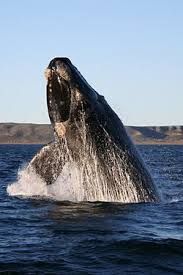 I was thinking about
this because of the Great Extinction issue. For me, it is hard to think
about, it is that painful. And of course we humans seem to be causing
it, and we need to do what we can to halt it. But then I thought, from a
Spirit level, it is like why are all these plants and animals choosing
to leave the planet? And where is it that they go? There is pathos and
mystery in their choosing to leave.
The Spirit level also tells me to just watch what humans are doing to the planet, and wonder about the process. It is a huge collective unfolding. On one level, it is tragic. On another level, it is something to just contemplate, what is it about the nature of life that this is happening? It's not like we are a disease, an aberration, that is outside of life. We are part of life, and this is what is happening. It is not just our doing, it's not 'personal. I'm not arguing for complacency; I'm just suggesting there is a deeper contemplation that takes us to the mystery of things.
So if your car won't start, the natural response may be to feel frustrated, and anxious about that appointment you have to get to. The Spirit perspective would be to wonder what it is about today and the way I am that my car won't start? That way it becomes de-personalised. You may not have an 'answer', but it is a different kind of contemplation. You never need take anything personally any more once you have that Spirit perspective. You can view everything objectively. So someone is unpleasant to you: no need to get offended, just wonder why that person felt the need to do that, and what the bigger picture might be, what Spirit might be trying to tell you. But again, don't rush to find an 'answer', it's not usually as simple as that.
The Spirit level also tells me to just watch what humans are doing to the planet, and wonder about the process. It is a huge collective unfolding. On one level, it is tragic. On another level, it is something to just contemplate, what is it about the nature of life that this is happening? It's not like we are a disease, an aberration, that is outside of life. We are part of life, and this is what is happening. It is not just our doing, it's not 'personal. I'm not arguing for complacency; I'm just suggesting there is a deeper contemplation that takes us to the mystery of things.
Saturday, 17 November 2018
ONGOD OROOD
The way I naturally relate to the spirit world, when I am 'working', is through embodiment. For me, this has more power than the usual way of journeying, where one lies still. Perhaps it is because the spirits also have the power of the body, and are therefore more present in this reality. It is the normal way of working in Mongolian Shamanism, where it is called Ongod Orood. But it doesn't seem to be on offer in our society. I have no reason to doubt the ancient British would have worked in a similar way too, as it seems quite natural.
I'm interested in exploring this way with other people. If this intrigues you, and you want to come and see me in Moretonhampstead in Devon, UK, please let me know and we can try and sort something. I work in an informal, let's-see-what-happens kind of way.
Meanwhile, here is an excerpt from the book Chosen by the Spirits, by Sarangerel, a Mongolian Shamaness who also has European ancestry:
 |
| Sarangerel |
While you are embodying the spirits, you are in perfect safety; the spirits will not allow any harm to come to your body while they are in it. You may find yourself singing songs you have never heard, doing ritual actions you have never learned, dancing dances you have never seen. This is because your udha (spirit helper) is working directly through you and teaching you the techniques that have passed down through the sunsnii mur, the stream of shamanic experiences and techniques from the lives of all the shamans your udha has partnered with before. Just relax, release all expectation, observe, and learn."
Sunday, 11 November 2018
WHO ARE WE?
According to the latest genetic research, who we are is influenced much more by our genes, and much less by our environment, than we have been led to believe. And the older we get, the more we are an expression of our DNA, and the less we are an expression of our environment. The more, in a way, we become who we are.

This is based on decades of statistical research, particularly into twins. Even our environment is partially a product of our DNA: eg the availability of TV as a child used to be taken just as an environmental influence. But it's not. How much the child actually watches is mainly genetic. Academic attainment is largely genetic. And because it is heritable, the favourable environment for it as a child is also genetically related. If there is genuine equality of opportunity, then heritable meritocracies are produced.
This is not fair in the slightest, and goes against much social theory that tends to favour the environmental influence. But it seems to be how things are. The implications are huge.
Weight is another example. Adopted children growing up in a health-conscious family tend to adopt the weight pattern of their biological parents. The environment makes little difference.
The reasons these findings are controversial is that they seem to give backing to the idea of an innately superior class of people. If you think in terms of some people being 'better' than others, and you assess that in terms of peoples job ability and earning power, the fact that is heritable gives backing to this idea. But I see it as an idea that has always been around: people have egos, and if we can find a way of feeling better than others, we often will.
Having grown up around such 'better' people, I never noticed a marked ability for sensitivity to and care for others. If anything, it seemed to me worse. And I'm sure that is heritable as well. And ultimately we all have our own unique gifts, and it misses the point to get into comparing ourselves to others. Each person, each plant, each animal has its own spirit.
Anyway, for me there is a mystery in all this. Professor Plomin does not even state his assumption that there are only 2 possible influences on who we are: DNA and the environment. And there seem to be a lot of factors that are not explained by either. Plomin calls these influences 'non-shared environment' to explain the differences between eg identical twins. But these influences continually stump researchers, however hard they look. They seem to be unobservable and unmeasurable. They just assume they have to be there.
I think they have found the spirit-element! It seems to me rather like the brain researchers who, after all these years, are still completely stumped by what consciousness is and how it arises. This, to my mind, is because consciousness, the dreaming, is what lies behind even the perception of a thing called the brain in the first place.
So back to this part of who we are that stumps the geneticists. Good! Plomin is a bit of a straight-line thinker who doesn't even name, let alone question, his own assumptions. He can't bring himself to say well there's a mystery here. But there clearly is a mystery. There is a way in which we are unknowable that is at the heart of who we are. It is the spirit within our earthly presence that continually dreams us into being. It brings influences and characteristics from who-knows-where. And it is creative, it cannot be pinned down.
We are this synergy between spirit, DNA and environment.
I think science can only go so far in any field before it is defied. That is because it is a specialised, and therefore limited, way of looking at reality. Matter dissolves into counter-intuitive quantum reality, in which there are only probabilities. Most of the universe has been discovered to be missing. And much of the human personality turns out to be a mystery, not explicable in terms of either genes or the environment.
Monday, 5 November 2018
Ancestors

And in particular there will be ancestors who were around before the modern era, who do not partake of its lack of balance, and who therefore have the medicine to help heal that lack of balance. So build a relationship with one of them. That is such a wonderful idea.
Saturday, 27 October 2018
WHO ARE THE ANCESTORS?
It's the Festival of Samhain on Oct 31st. The Festival of the Dead. The time when we honour and celebrate our ancestors. What does that mean? The ancestors are very important in traditional cultures, but we have lost this sense.
Those who came before have helped make us what we are. We live in a culture where the importance of the individual is stressed, the individual who is supposed to make it big on their own. The sense of being enmeshed in, and supported by a community of both the living and the dead is downplayed. The rights of the individual, rather than the needs of the community, are what matters.
When we become sensitive to Spirit in our lives, the emphasis is less on the Will and the ego and more on being receptive. More feminine, if you like. And that includes receptivity and gratitude to that which came before.
It can be difficult with parents, our primary ancestors. We often have issues with them. We are also taught to blame them for our psychological woes. DNA research is increasingly showing that who we are is much less a product of our environment than we thought. Maybe that will take some of the blame off the parents?

At any rate, our parents gave us the power to live. Once we can stop wanting our parents to be anything other than the half-formed people that we all are, that frees us to be more comfortable with who we are. It's simple, we just need to stop. And that frees us to feel the power of life that they gave us, and that still runs through us.
More than that, we are the product of a long line of parents, each supporting the next generation. And it is good to feel that.
And more than that, we are also a product of the gifted people of the past and the influence they have had. I might sound old-fashioned here, but it is where education in its best sense matters. It gives us that connection to the ancestors, an appreciation of where we come from.
 |
| Shakespeare |
If you have British roots, then Henry VIII, for example, was our ancestor, and he helped free us from the medieval religious outlook, and gave the possibility of each person having their own relationship to the Divine. Then there are all those great Victorian novelists - Eliot, the Brontes, Dickens. And the poets and the painters. And the scientists. And so on. All these great teachers. And from other cultures and the distant past, too: they are also influences.
If we immerse ourselves in these people, we learn to think and observe and to feel and to imagine more widely and deeply. And we come to know our story. And our story is now the story of the world, and it goes back thousands of years. More than that, Evolution (if you go with that story) and DNA research show the thousands of life-forms that are also our distant ancestors, who gave us most of what we are.

This idea of educating ourselves is not an idea that is usually bandied about in the world of Shamanism. But I think it is fundamental. Just to repeat, we need to know our story, like any traditional person would.
These are great gifts from the past. Samhain is a time to celebrate the richness of the people and life-forms who have come before, because they have given us the power to live and made us who we are.
Wednesday, 24 October 2018
SHAMANISM and the NEW AGE
William Bloom
is interesting. He has articulated and defended the 'New Age' for some
decades now. The 'New Age' is often used as a derogatory term by
'traditionalists' to suggest a superficial eclecticism and lack of
seriousness, as in 'New Age Shamanism'. I think that in the modern Shamanic world, anyone who
thinks they are traditional is a fantasist looking for certainty and,
sometimes, for someone to look down on. We do not have tradition,
full-stop, and those that are extant are not ours.
 The strength of our situation is that we are no longer required to
think along set lines. What can appear to a 'traditionalist' as a 'pick
and mix' approach to spirituality can in fact be deeply authentic, the
product of a keen sensitivity to the calls of the spirit. This is one of the strengths of the 'New Age'.
I think that along with this freedom comes the need to set our Shamanism in a universal context. Yes, we are trying to address much that has been lost in the transition from early to modern cultures. That, I think, is what we have to offer the world. But that understanding needs to be set in a broad context. We need to be 'educated', appreciate our ancestors such as Shakespeare and William Blake :) , or else we become one more -ism thinking along narrow lines.

I think that along with this freedom comes the need to set our Shamanism in a universal context. Yes, we are trying to address much that has been lost in the transition from early to modern cultures. That, I think, is what we have to offer the world. But that understanding needs to be set in a broad context. We need to be 'educated', appreciate our ancestors such as Shakespeare and William Blake
:) , or else we become one more -ism thinking along narrow lines.
Subscribe to:
Posts (Atom)